PAX: Emotional Processing


A Research-Backed Mobile Application for Emotional Wellness — Developed
in Collaboration with The George Washington University
Basic Information on Research Project
Most people suppress difficult emotions without even realizing it. What they do not realize is the cost. Research shows that unexpressed emotions do not simply disappear — they accumulate, elevating stress hormones, weakening immune function, and over time, contributing to serious physical and mental illness (Pennebaker & Beall, 1986). The gap between feeling something and having a structured way to process it is not just uncomfortable. It is a public health problem.
This semester, I collaborated with Dr. Phillip J. Moore, Associate Professor of
Applied Social Psychology at The George Washington University, on a project titled PAX: Emotional Processing — built to close that gap. Dr. Moore's research examines how psychological and environmental factors shape health behavior, providing the scientific foundation that guided the project's development.
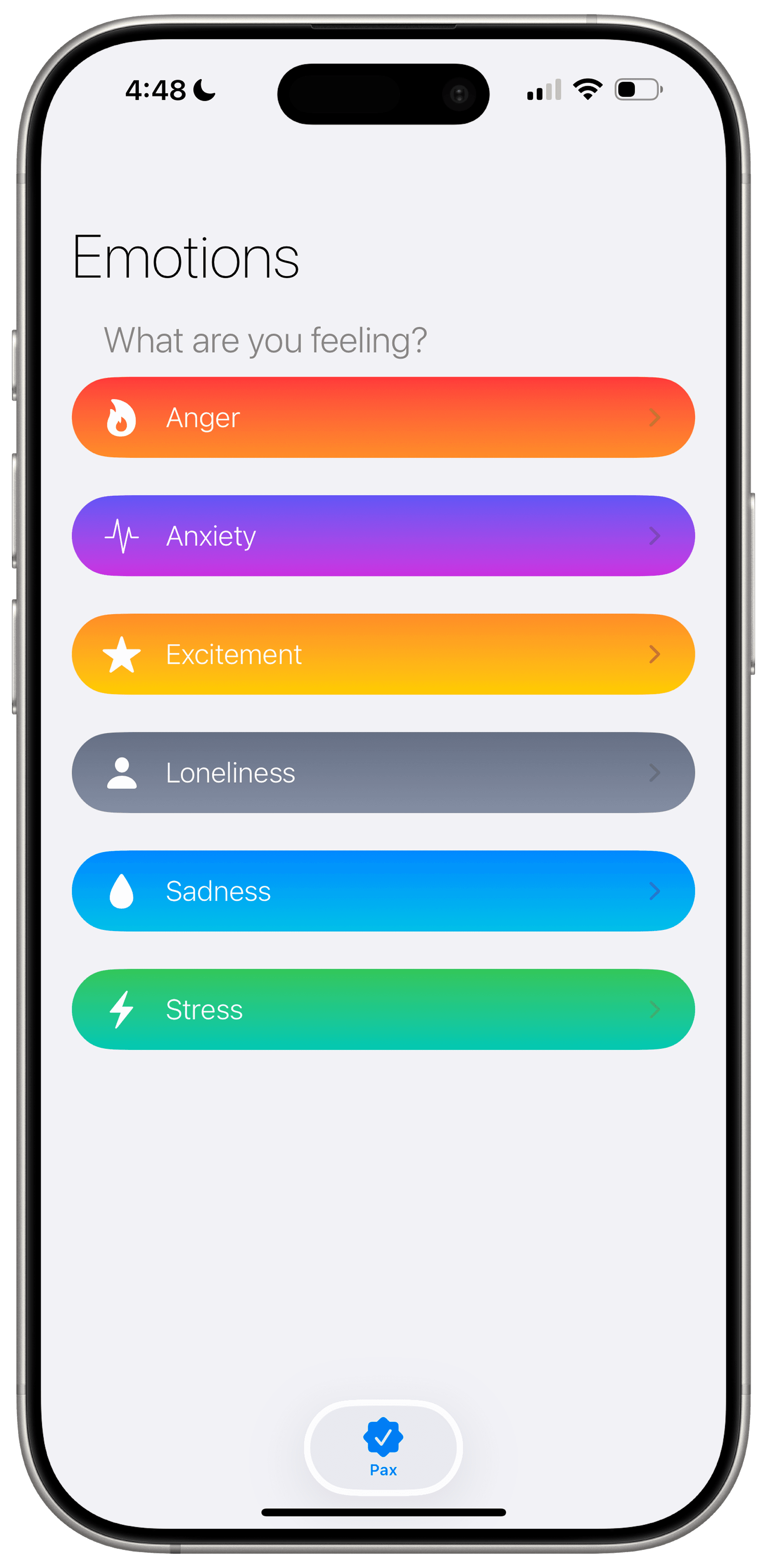
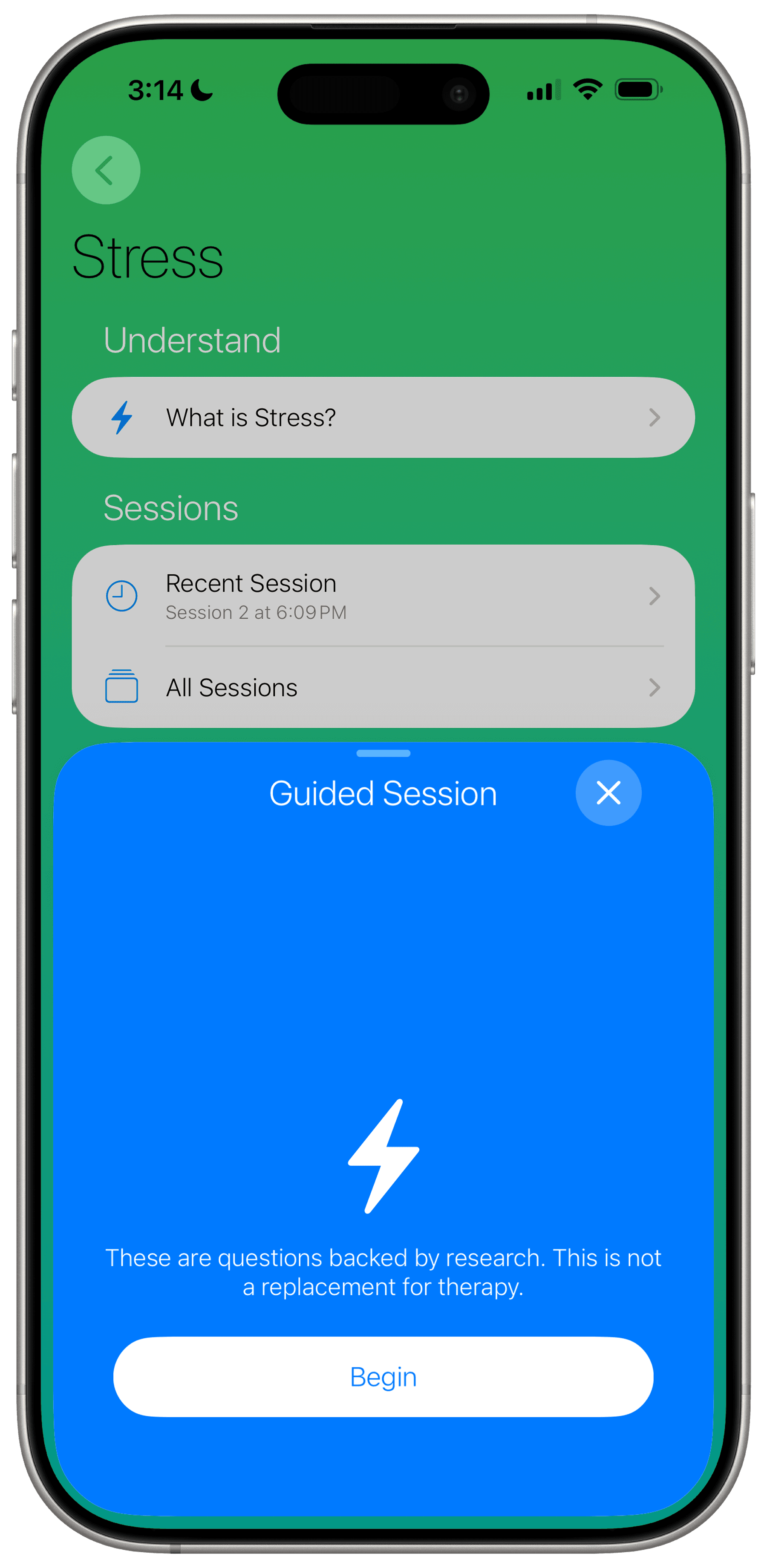
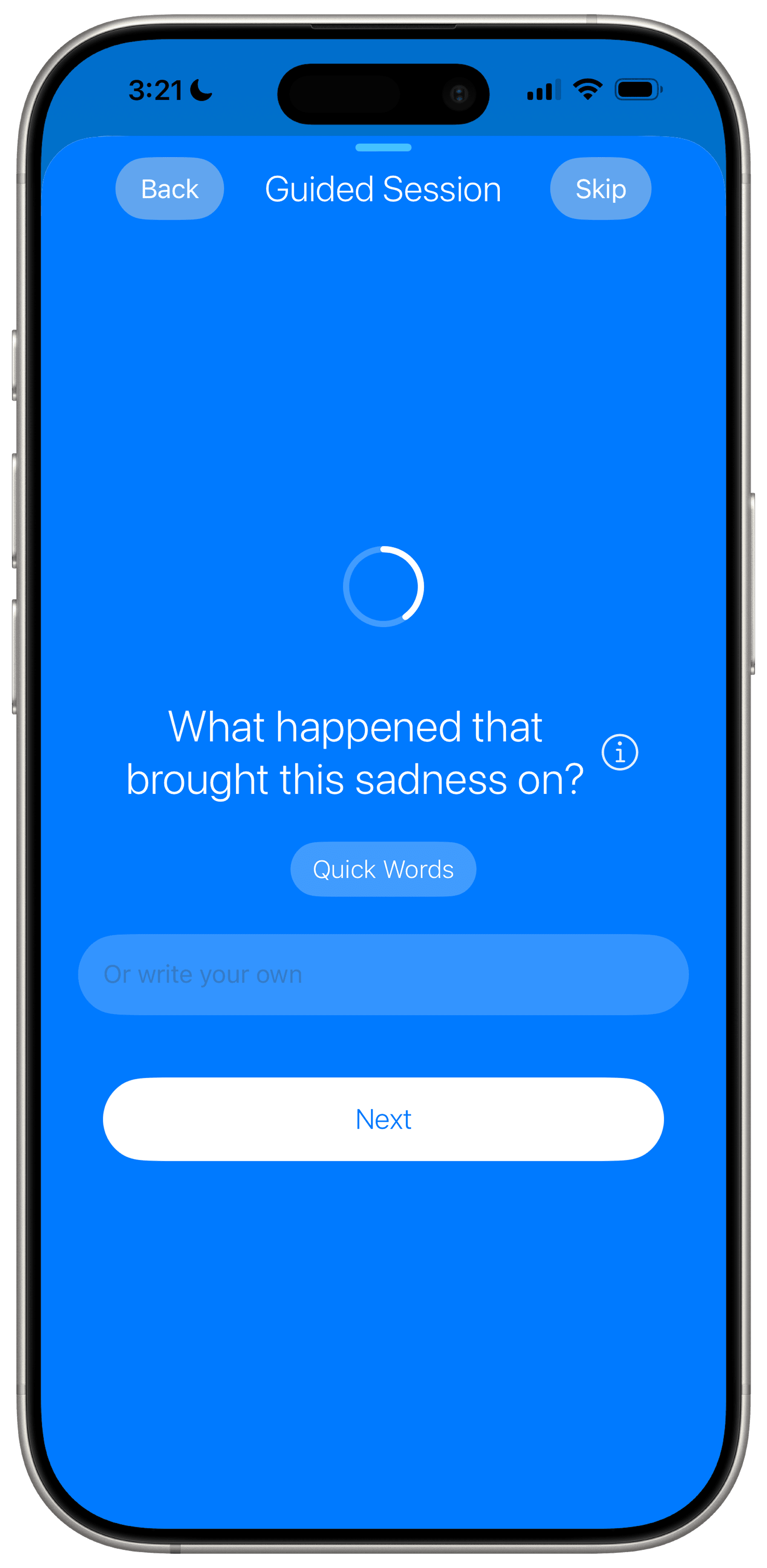
I designed and built PAX — a mobile application that guides users through
structured writing sessions calibrated to specific emotions. For the first time, PAX tells you how well you are actually processing your emotion — in real time, based on the language you use. Not a mood score. Not a generic prompt. A genuine reflection of your own emotional progress, something even a therapist cannot offer in the moment. That capability is powered by Apple's Natural Language framework, which reads the words users write and detects the shift from reactive, venting language to insight-driven, healing language — the exact linguistic markers Pennebaker's research identified as signs of real emotional processing. Critically, this all happens entirely on the user's device. No data is stored, transmitted, or shared — ever. The analysis lives and dies on your phone, making PAX one of the most private emotional wellness tools ever built.
As a Business Administration student concentrating in Marketing with a minor in Psychology and Brain Sciences, this project sits at the core of my academic identity. PAX is both a scientific tool and a consumer product — and building it required both lenses simultaneously. Dr. Moore hopes to discover whether technology can make evidence-based emotional processing accessible at scale — reaching the people who need it most,
exactly when they need it.
The Effect of Basic Research on the Industry
The mental health app industry has exploded. Today there are over ten thousand mental health applications available for download — promising relief from anxiety, depression, stress, and more. But here is the problem nobody was talking about: most of them had no scientific foundation whatsoever. People in vulnerable emotional states were downloading apps that had never been tested, never validated, and in some cases were doing more harm than good.
The American Psychiatric Association (APA) saw the crisis developing. In response, they conducted a stakeholder-engaged research workshop in December 2019, convening a diverse expert panel of sixteen professionals — psychiatrists, psychologists, social workers, nurses, medical students, and individuals with lived mental health experience — to systematically evaluate the state of mental health apps and determine what standards the industry urgently needed to meet. Using a
modified Delphi procedure, an iterative expert consensus method, their findings were unambiguous: privacy concerns were mounting, evidence of clinical benefit was limited, and a far more rigorous evaluation framework was needed (Lagan, 2021).
The business decision that followed was significant. The APA updated its App
Evaluation Framework — known as the APA App Advisor — establishing five non-negotiable dimensions every credible mental health app must meet: access and background, privacy and security, clinical foundation, usability, and data integration toward a therapeutic goal (Lagan, 2021).
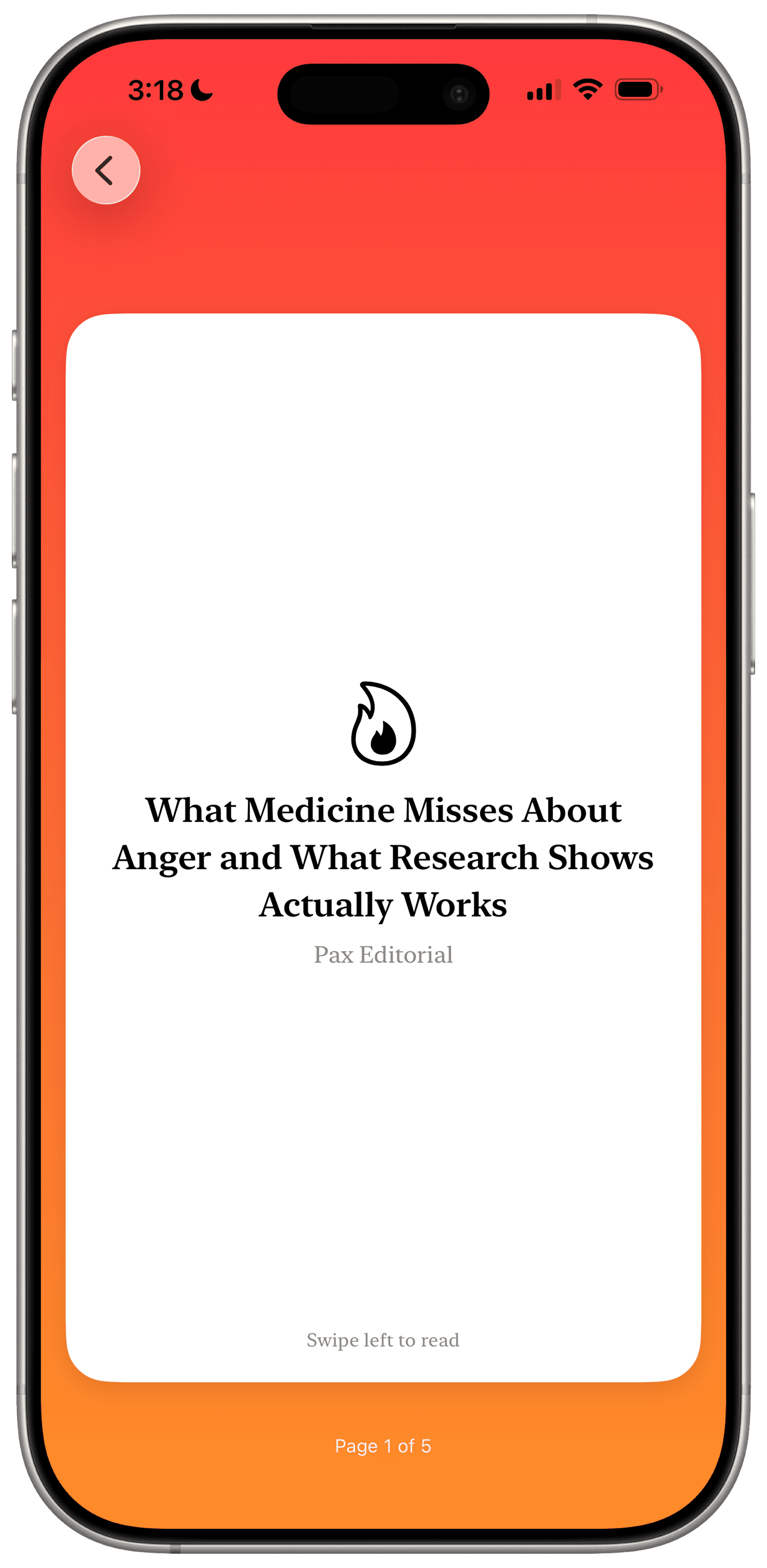
This decision matters deeply to PAX — because PAX was designed to meet every single one of them. Access and background: PAX was built in direct collaboration with Dr. Phillip J. Moore, Associate Professor of Applied Social Psychology at GWU, giving it the academic credibility and accessibility that most apps on the market lack. Privacy and security: PAX processes all language analysis entirely on-device — nothing is stored, transmitted, or shared, ever. Clinical foundation: PAX is grounded in Pennebaker and Beall's (1986) forty years of peer-reviewed expressive writing research — and that research does not stay hidden behind the product. For each emotion, PAX offers users articles written specifically for that emotional experience,
explaining the science behind why writing heals, drawing directly from APA-
validated research and Pennebaker's published work. Users do not just processtheir emotions — they understand why the process works, in an engaging, beautifully designed reading experience built specifically for that purpose. This transforms PAX from a tool into an education platform — something no competing app currently offers. Usability: PAX was designed from the ground up to feel effortless to someone in emotional distress. Data integration: PAX's use of Apple's Natural Language framework delivers real-time feedback on emotional processing progress directly within the session itself.
The APA did not just influence the industry — it defined the standard. PAX was built to meet every dimension of it. That is what makes it different from every other app in this space.
Goals, Tasks and Skills
Goals
When I began this research, I set two goals for myself. The first was to submit PAX to the Apple Swift Student Challenge — one of the most competitive student developer competitions in the world. The second was more personal: to begin integrating PAX with friends and peers across the GWU campus, testing it with real users in real emotional moments and using their feedback to improve the product. Both goals were accomplished. PAX was submitted to the Apple Swift Student Challenge, and early campus testing began, giving the project its first real-world validation beyond the research and design process.
Tasks
The tasks I excelled at most were the ones that required thinking across disciplines simultaneously — translating dense psychological research into a design experience that felt effortless, positioning the product in a way that told a clear and compelling story, and connecting the science of emotional processing to a technology experience that felt genuinely human. I learned early that the most powerful products live at the intersection of disciplines. PAX is not a psychology project that happened to become an app. It is what happens when research, design, technology, and marketing think together from the very beginning.
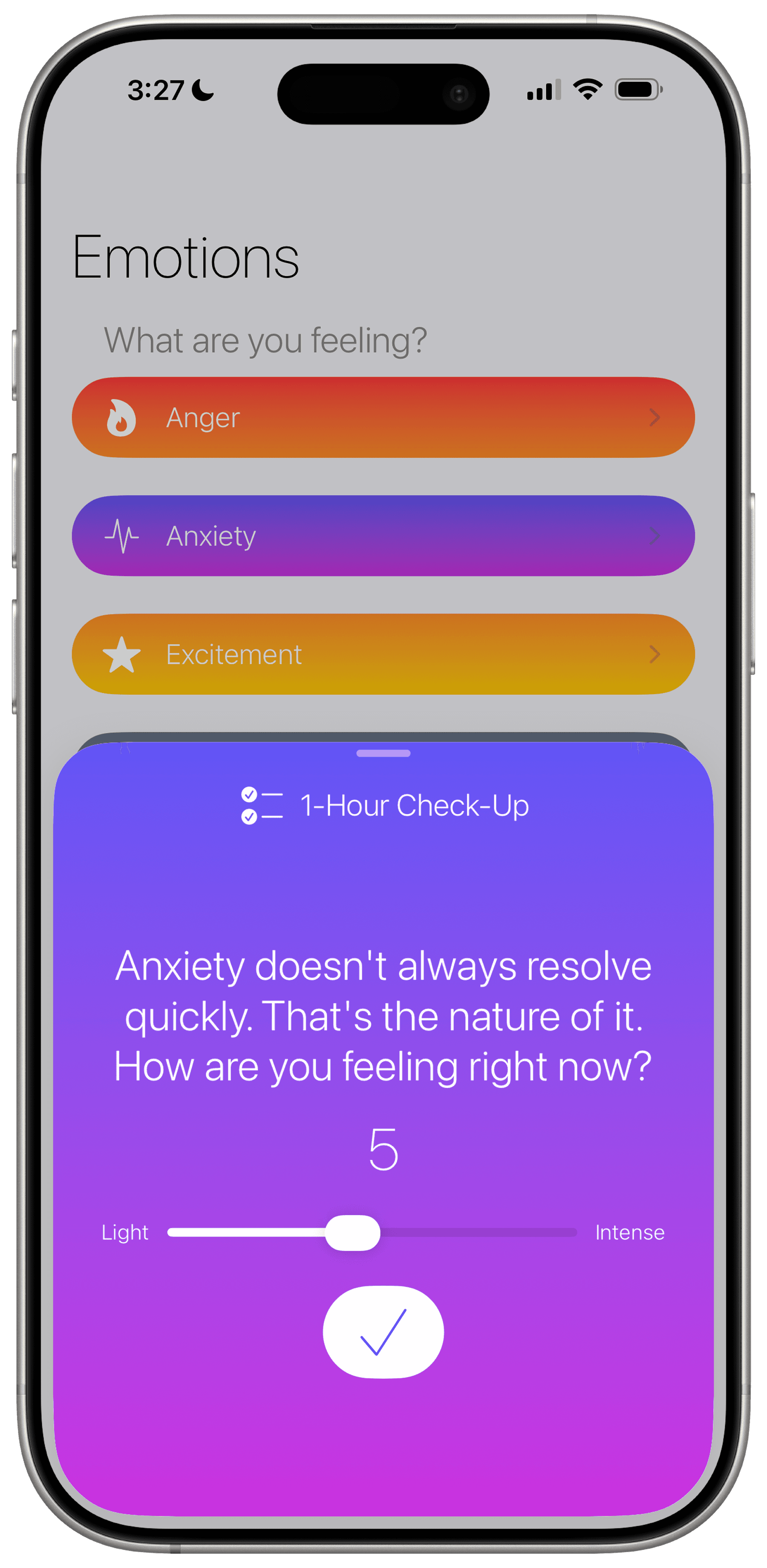
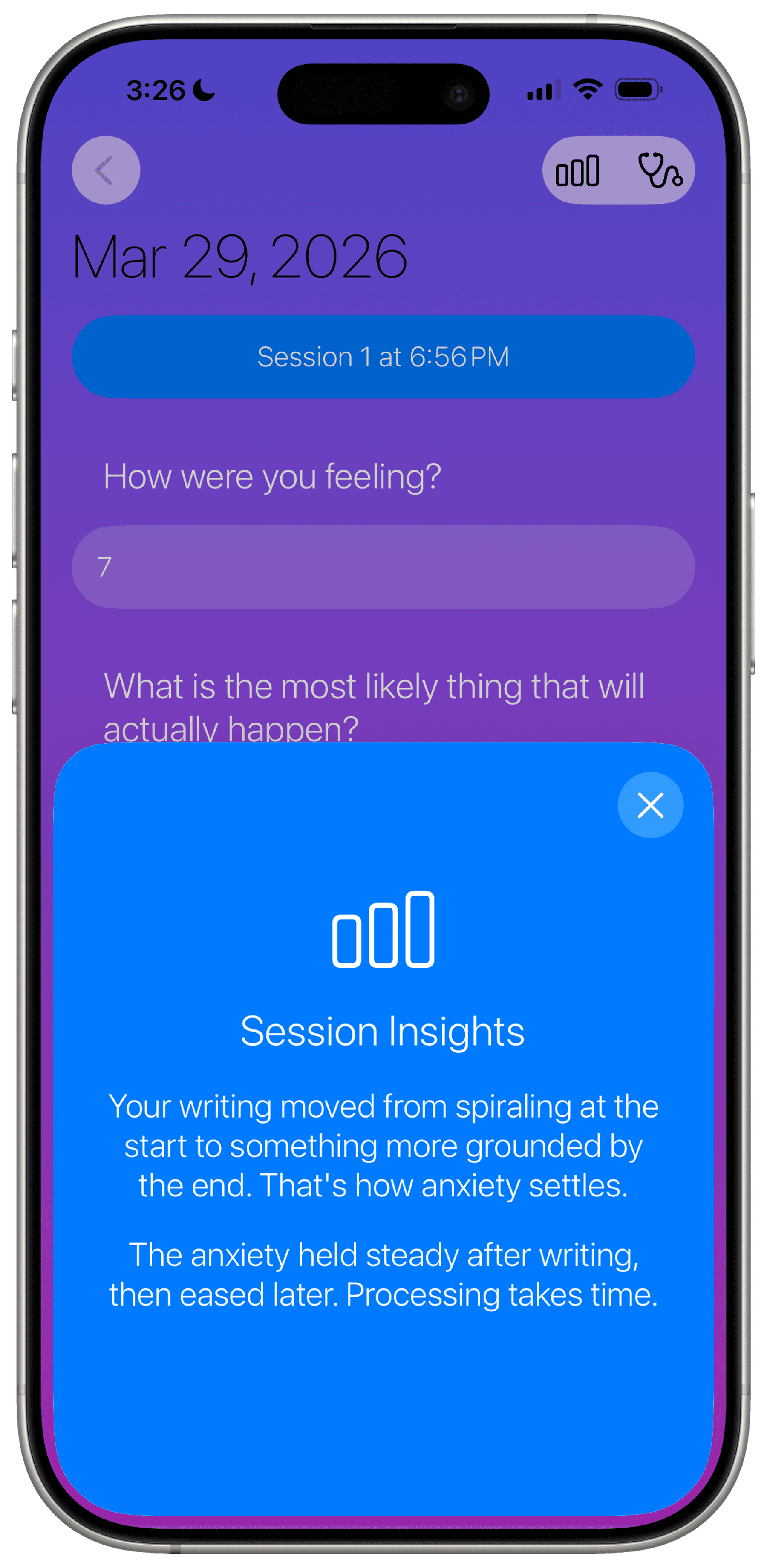
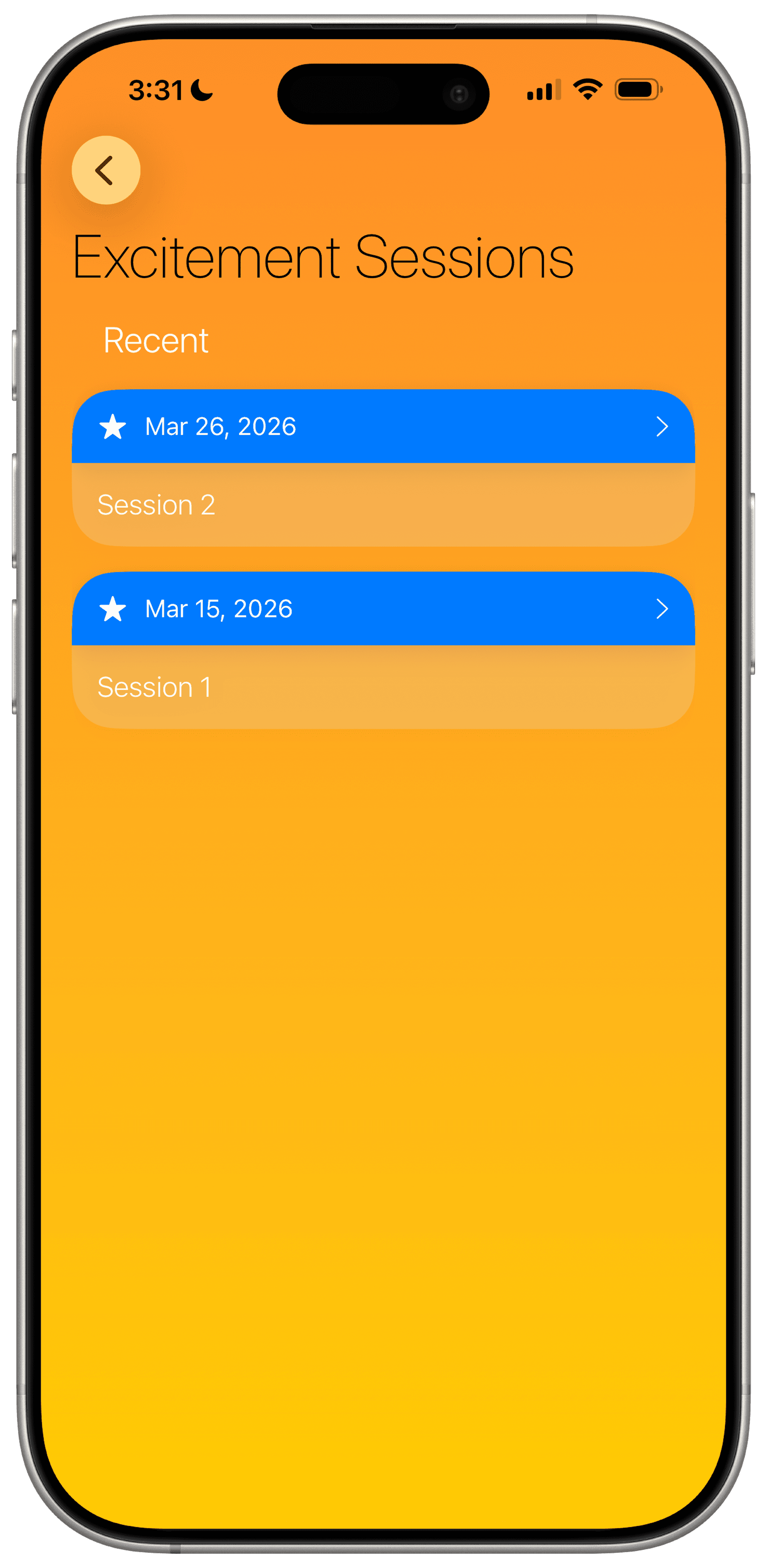
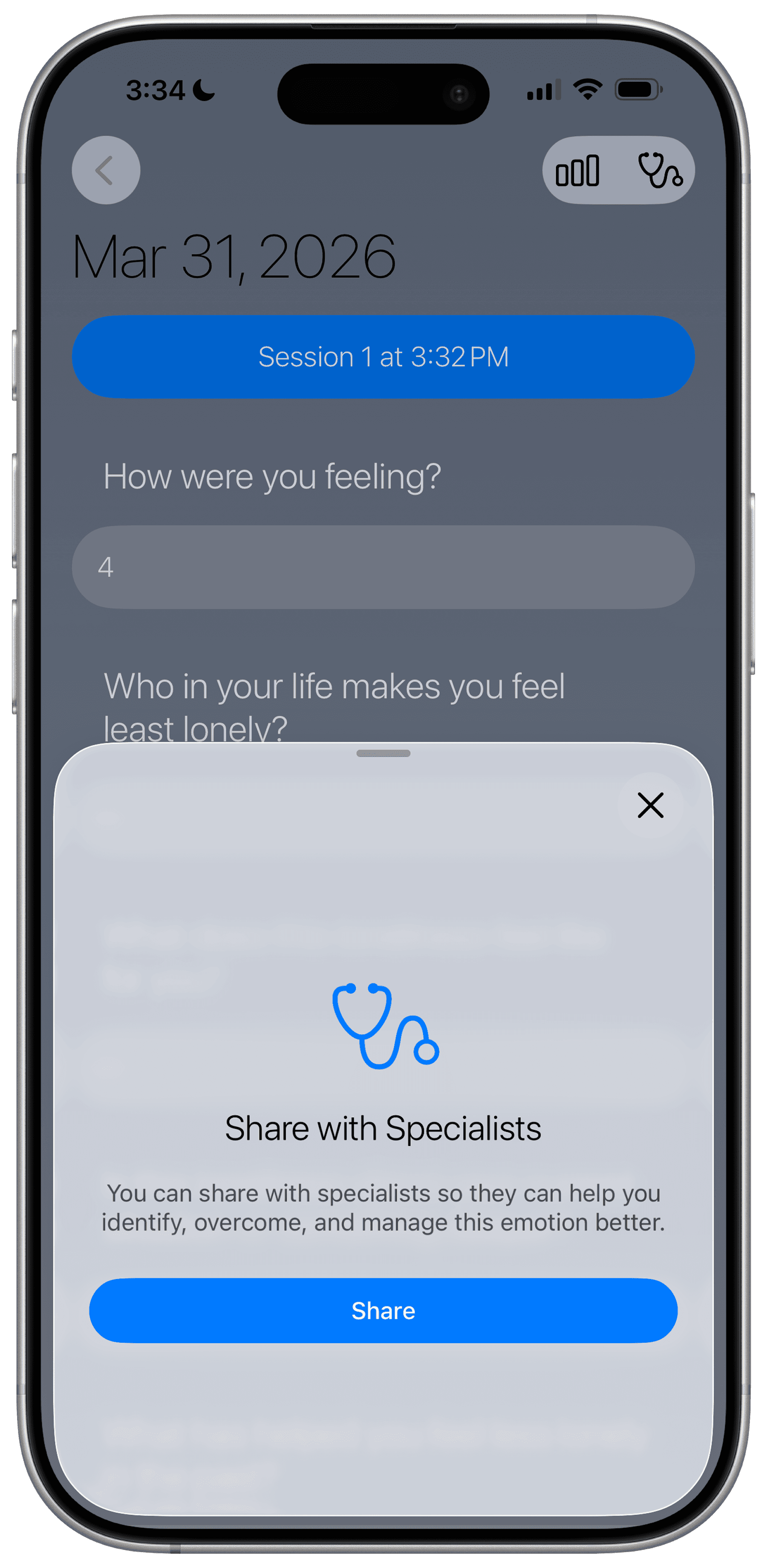
The moment I felt most stuck was one of the most important lessons of the entire project. The challenge was not building the app — it was figuring out how to present information in a way that actually served people. I built five different versions of PAX before it felt right. Each one taught me something the previous version could not. Some felt overwhelming. Others felt cold. None of them felt like something a person in emotional distress would actually want to open. I kept returning to the same question: if someone is anxious at midnight, what does this screen need to feel like? I went back to the drawing board constantly — sketching and visualizing every screen before writing a single line of code, mapping how each experience should feel before deciding how it should look.
The breakthrough came through relentless iteration and testing with real people across different ages and backgrounds. I also brought the problem to multiple perspectives — meeting with Professor Moore to validate that every design decision was grounded in sound psychological research, consulting a marketing professor to think about how PAX would reach people, and working with a business professor toexplore what a sustainable model for the product could look like. What I discovered is something no single discipline could have taught me alone: people may have access to the best information in the world, but if it is not presented with clarity, calm, and intention — especially in a mental health context — they will not engage with it. Design is not decoration. Design is the difference between something that helps and something that gets deleted.
What I learned about myself was how to make information feel friendly and worth engaging with. I learned the design process deeply — iterating, testing, updating, building, and shipping. I learned that when you bring disciplines together, the result is always more useful than the sum of its parts. And I discovered a standard in myself I did not know I had — caring about every detail, from the color assigned to each emotion, to the font and its size, to the way a single sentence in an article should land for someone who is struggling. None of it was accidental. All of it was intentional.
Skills
Building PAX developed and sharpened the exact skills my career in design and product will demand. Human-centered design became my primary operating mode — every decision on PAX started with the user's emotional state, not the technology's capability. Cross-disciplinary thinking became a competitive advantage — the ability to take peer-reviewed psychology research and translate it into an interface decision, through multiple attempts, constant questioning, and a refusal to ship anything that did not feel right. Research translation into product — taking forty years of Pennebaker's published work and making it accessible, engaging, and beautiful to a college student who has never heard of expressive writing — is perhaps the skill I am most proud of developing.
Leveraging technology for human impact became concrete and real — not by
simply integrating a framework, but by developing the judgment to choose the right one for the right reason. Apple's Natural Language framework was selected because it solves a specific problem: giving users real-time insights into how they are processing their emotions, directly within the session, adding genuine value to the experience. But selecting it was only half the work. Integrating it correctly, in a way that produces accurate, helpful, and appropriate output, required extreme care. This is a mental health application. Inaccurate or unwanted information surfacing at the wrong moment is not just a technical error — it could cause real harm to a real person. The skill I developed was learning to hold both dimensions at
once: building something innovative enough to be useful, and careful enough to be safe.
These are the skills that will define the designer and product builder I am becoming. PAX proved I can use them. Now I want to spend a career applying them — building things that sit at the intersection of human experience and technology, where the goal is not just to ship a product, but to make someone's life genuinely better.
SAR Statement
Designed and developed an app that helps users process emotions through
research-backed guided writing; collaborated with a GWU psychology professor to ensure the product was grounded in validated psychological science; implemented Apple's Natural Language framework to analyze language patterns in real time, identifying whether users are processing or venting; submitted to the 2026 Apple Swift Student Challenge.
References
Lagan, S., Camacho, E., & Torous, J. (2021). Mental health app evaluation: Updating the American Psychiatric Association's framework through a stakeholder-engaged workshop. Psychiatric Services, 72(9), 1095–1098. https://doi.org/10.1176/appi.ps.202000663
Pennebaker, J. W., & Beall, S. K. (1986). Confronting a traumatic event: Toward an understanding of inhibition and disease. Journal of Abnormal Psychology, 95(3),274–281. https://doi.org/10.1037/0021-843X.95.3.274