Individual Observation Report:
Albert Einstein Memorial

2101 Constitution Ave. NW, Washington, DC 20418
Apple Brain
Seeing the world from the feet of a bronze Albert Einstein has a certain poetry. Tucked away in a peaceful place outside the National Academy of Sciences in Washington, D.C., the Albert Einstein Memorial is a quiet attraction for human activity as well as a tribute to intellectual curiosity. This project required me to spend thirty minutes quietly watching the memorial and its surroundings, carefully documenting what I saw, heard, and felt. What follows is not only a list of events but also an effort to extract significance from simple actions surrounding one of the most exceptional minds humanity has ever seen.
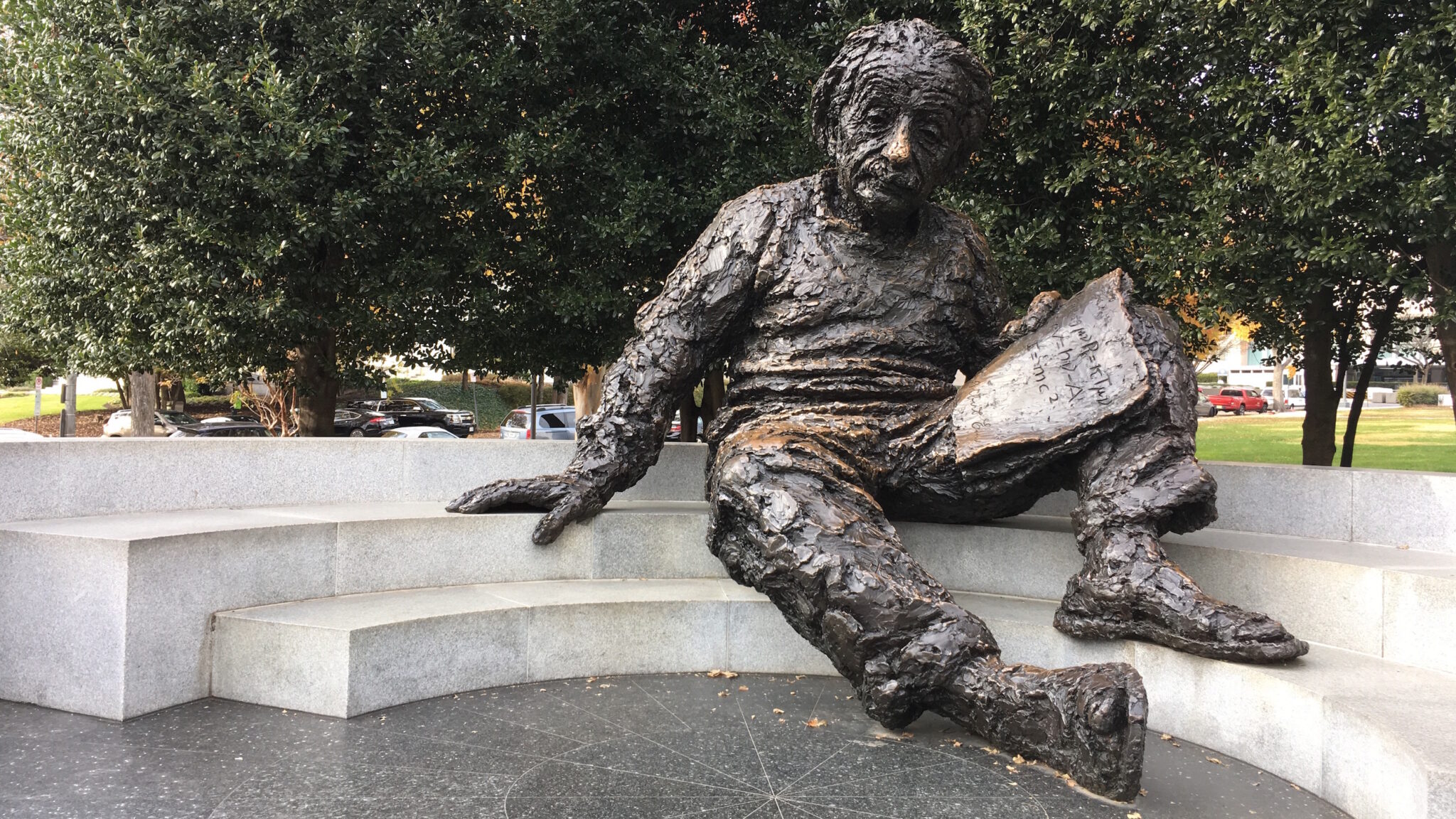
Resting on a curved bench, the Einstein statue appears relaxed but thoughtful. His bronze eyes are somewhat squinted, as though he is mid-thought or perhaps mid-conversation with the stars. Beneath him, a large circular platform carved with a celestial map—constellations, planets, and symbols.
It's calm here. Though the site is just off Constitution Avenue, the surrounding trees and bushes soften the city noise. During my visit, the temperature was cool enough to keep people in light jackets, and the sun shone through the branches in ways Einstein would probably love (and
question). On Sunday, I came about 2:15 PM, a time with consistent but not excessive people.
Over the 30 minutes, I counted 21 guests. Most arrived in small groups—families, friends, or tourist pairs—but a few came alone, usually with a camera (or took their cellphones out to take a picture) in hand. Almost everyone interacted with Einstein somehow. Kids crawled onto his lap. Adults touched his shoulder or knee. Gently chuckling, one couple imitated his seated position alternately. Kneeling by the star map, a man about thirty years young, attempted to photograph the coordinates inscribed below. Here, I realized this memorial was not traditional admiration. It was more intimate and amazing, like welcoming an old friend.
Reflection
Of the 21 guests, just four read the three engraved sayings behind the statue. At the last quote, "The right to search for truth implies also a duty; one must not conceal any part of what one has recognized to be true," one guy stood for almost two minutes. Before leaving, he nodded a little to himself. The truth he was witnessing was radiant and contagious. There was an unwritten rule among guests to speak quietly. Talks were quick and quiet. Phones appeared but rarely remained up long. Many people hung around, not hurrying off like at other tourist sites. For several minutes, one woman stood on the edge of the star map and simply looked up at the sky, not talking or moving. During that time, I noted the stillness within and all around her.
While not obsessive, photos were rather common. The creativity surprised me, people sat beside Einstein, tried panoramic circle shots, and framed the statue through leaves. People seemed to be trying to see him, not only to notice him. I recall a kid who looked at the statue in curiosity. He looked at his father and asked him a very interesting question, "Why is he smiling?"
Her father said, "Because he knows something.". The kid looked even more confused.

The Einstein Memorial seems straightforward at first—merely a statue on a pedestal. But what I witnessed in those thirty minutes was a subtle dance of respect, admiration, curiosity, and reflection. Einstein was not treated by people as a small historical figure. They engaged with him
as a symbol of knowledge and comfort, someone who reduces the severity of complexity (and creates it).
Like Einstein's theories, the way this area combines science with emotion is rather unique. While Einstein's serene look reminds us not to fear it, the star map under our feet calls to mind the immensity of the universe. Every smile, every hand on the bronze shoulder, every moment of stillness is its kind of data point, and information. Showing us how people interact with memory and knowledge.
Connecting the Case to My Own Consumer Brain
The memorial changes Einstein from a remote genius to a relatable presence, which we often forget. Einstein welcomes us by sitting, not standing, and smiling rather than posing. The position in which he sits is comforting and welcoming to others. This design promotes emotional and physical intimacy.
Unlike noisier tourist memorials, the place's natural quiet appears to affect people's behavior. A slower pace and softer sound create an environment where thought seems only natural, like Einstein would’ve wanted. Silence is not only included in the event, but it's necessary.
Most monuments look back to loss, to sacrifice. This one looks ahead and into the future. It encourages us to question, picture, and get inspired. It honors Einstein not just by reminding us of who he was, but by inspiring us to wonder like he did.
While I was observing, I kept thinking about the little things individuals did, like the couple who posed next to Einstein, imitating his seated posture. Why that stance? Was it respect, laughter, or simply a feeling of connection? Another guest started circling the memorial clockwise; why not counterclockwise? Was it instinctive, cultural, or something else that led him to make that decision? Though they may appear insignificant, these are the kinds of questions that usually go unnoticed but might expose something more profound about how individuals see and emotionally react to places or products.
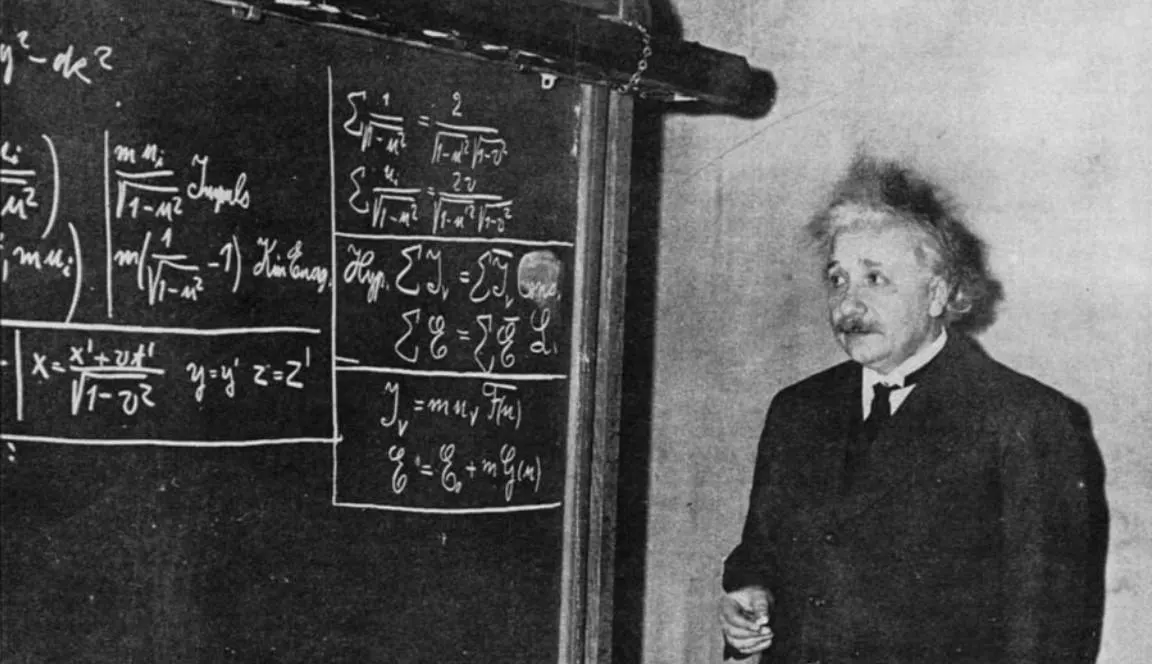
Marketing research centers around the question "why?" It is the question that steers from observation to valuable insight. It distinguishes between a passive and a curious mind. So profound that even Einstein used it throughout his life. Why does gravity act the way it does? Why does time bend near a black hole? In a sense, marketing research can reflect this attitude. Asking to understand, rather than to disapprove.
Observing human behavior teaches us emotional, spatial, and cultural actions. In marketing, knowing those "whys" helps us create products, messages, environments, and experiences that speak to people not only physically, but also emotionally.
Ethical Insight
When leaving the memorial, I spotted a girl, perhaps ten years old, resting her head on Einstein's arm. Though her mother was photographing, the girl was not posing. She was simply present, at ease, and relaxed. More than anything, that captured what makes this location so unique.
From the standpoint of marketing research, unfiltered behavior is priceless. It's real-world knowledge of how design, environment, and emotional tone shape human experience. It's not driven by a survey or affected by controlled circumstances. The Einstein Memorial provides a space for people to reflect, explore, and wonder in peace and presence. As researchers, seeing these little behaviours helps us to understand how space and symbolism shape interaction and perception with products. In addition, the kid who asked the question to his parent may have given me the best lecture of the exercise. Always asking why. Things are deeper and greater when you ask why. Especially when trying to observe the behavior of others with something. The emotional connection here is a strong reminder that data doesn't always come in numbers—it usually starts with observation.
Einstein once remarked, "The most beautiful experience we can have is the mysterious." During the calm, reflective half hour I spent at his memorial, I witnessed mystery, not in a way that frightened others but rather in a way that inspired them to lean in closer.